Why Games of Chance Became Central to Crime Fiction

Picture the scene almost any crime story can summon without a word of explanation: a smoke-filled room, a green baize table, the hypnotic spin of a roulette wheel, dice tumbling across felt while hard-faced men watch in silence. The casino and the game of chance have become such fixtures of noir, detective fiction, and crime cinema that we barely register how strange the pairing is. Why should stories about murder, corruption, and the underworld return again and again to the imagery of gambling? The answer is not mere decoration. Games of chance became central to crime fiction because they embody, in a single vivid image, almost everything the genre is really about.
Chance as the Worldview of Noir
To understand the attraction, begin with the philosophy that runs beneath the best crime fiction, particularly the strain we call noir. Noir is fundamentally a fatalistic mode. Its characters are not masters of their destinies but victims of forces larger than themselves, caught in webs of circumstance, undone by a single bad decision or a stroke of rotten luck. The world of noir is one in which the deck is stacked, the odds are against you, and the house, whatever form the house takes, always wins in the end. There could be no more perfect symbol for this worldview than gambling. A game of chance dramatises, in miniature, the noir conviction that we are all playing a rigged game against an indifferent universe, betting everything on outcomes we cannot control.
This is why the gambler and the noir protagonist are so often the same figure. Both stake everything on a hope, both know in their bones that the odds favour ruin, and both play anyway, driven by need, greed, or the simple inability to walk away. The detective chasing a case he may not survive and the gambler laying down his last chips are spiritual twins, and the genre understood this long before any critic spelled it out.
The Casino as the Perfect Setting
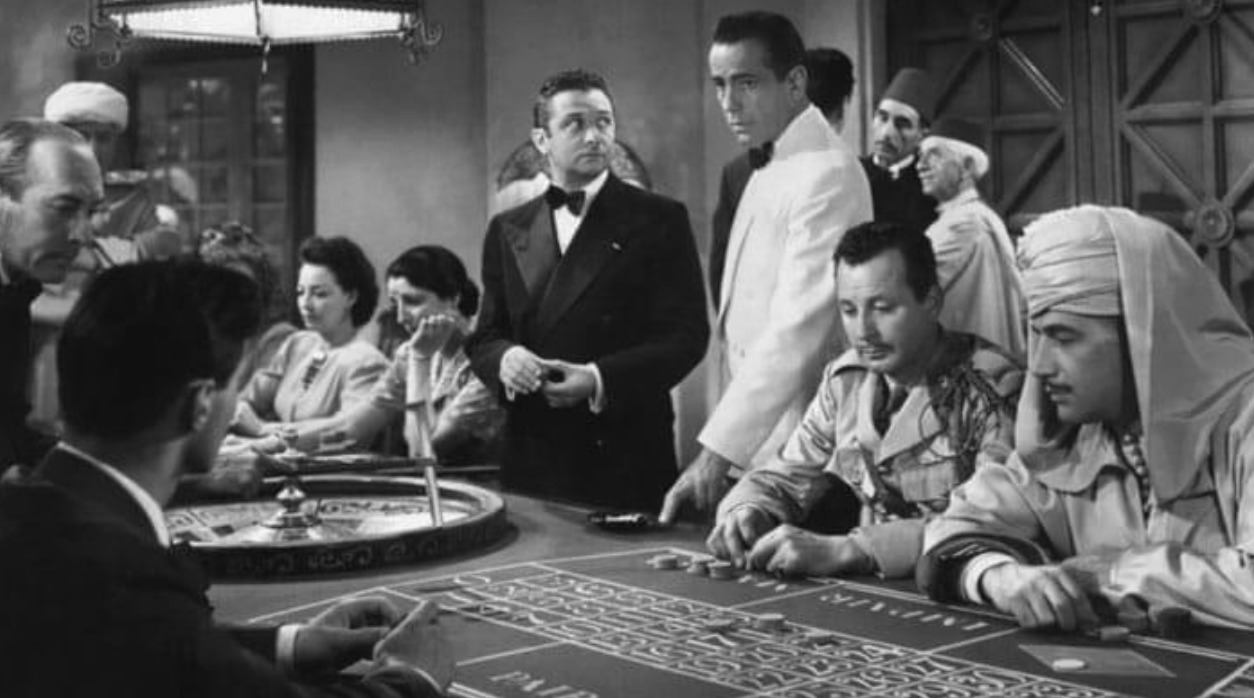
Beyond philosophy, the casino offers crime fiction an ideal stage. It is a liminal space, neither quite respectable nor quite criminal, a place where the glamorous and the dangerous mingle freely. Within its walls, enormous sums of money change hands in an atmosphere thick with desire, deception, and the constant possibility of violence. Everything a crime story needs is already present: wealth to be coveted and stolen, characters with secrets and debts, an underworld operating just beneath a glittering surface. The casino is a world in concentrate, where the forces that drive crime, money, power, want, and risk, are gathered in one luminous, nocturnal room.
It is also a place outside ordinary time and ordinary morality. The casino has no clocks and no daylight; it exists in a permanent artificial night that suits the genre's mood exactly. People go there to become someone else for an evening, to gamble with more than money, and that suspension of normal rules makes it fertile ground for the transgressions crime fiction loves to explore. The setting does half the storyteller's work, establishing tone, stakes, and moral ambiguity the moment the doors swing open.
The Gambler as Archetype
Games of chance also gave crime fiction one of its richest character types. The gambler comes in many forms, each useful to the genre. There is the cool operator who never lets the table read his face, the embodiment of control in a world of chaos, a figure the spy thriller in particular made iconic by opening its first great adventure across a baccarat table. There is the desperate addict, drowning in debt, whose need makes him vulnerable to every kind of manipulation and pulls him inexorably toward crime. There is the cheat, whose hidden skill and inevitable exposure supply ready-made tension. And there is the figure at the edge of the table whose presence promises that nothing here is quite what it seems.
The enduring appeal of places such as Dicepalace Casino rests partly on this same fascination with character under pressure. Risk creates a stage on which personality becomes visible. Confidence, caution, arrogance, patience, desperation, and self-control all emerge more clearly when something meaningful is at stake.
What unites these types is that gambling externalises character. How a person plays, what they risk, how they handle winning and losing, reveals who they are with a clarity that ordinary scenes struggle to achieve. A crime writer can tell us everything about a character simply by showing them at the table, and the genre has mined this device endlessly because it works.
Suspense Built Into the Spin
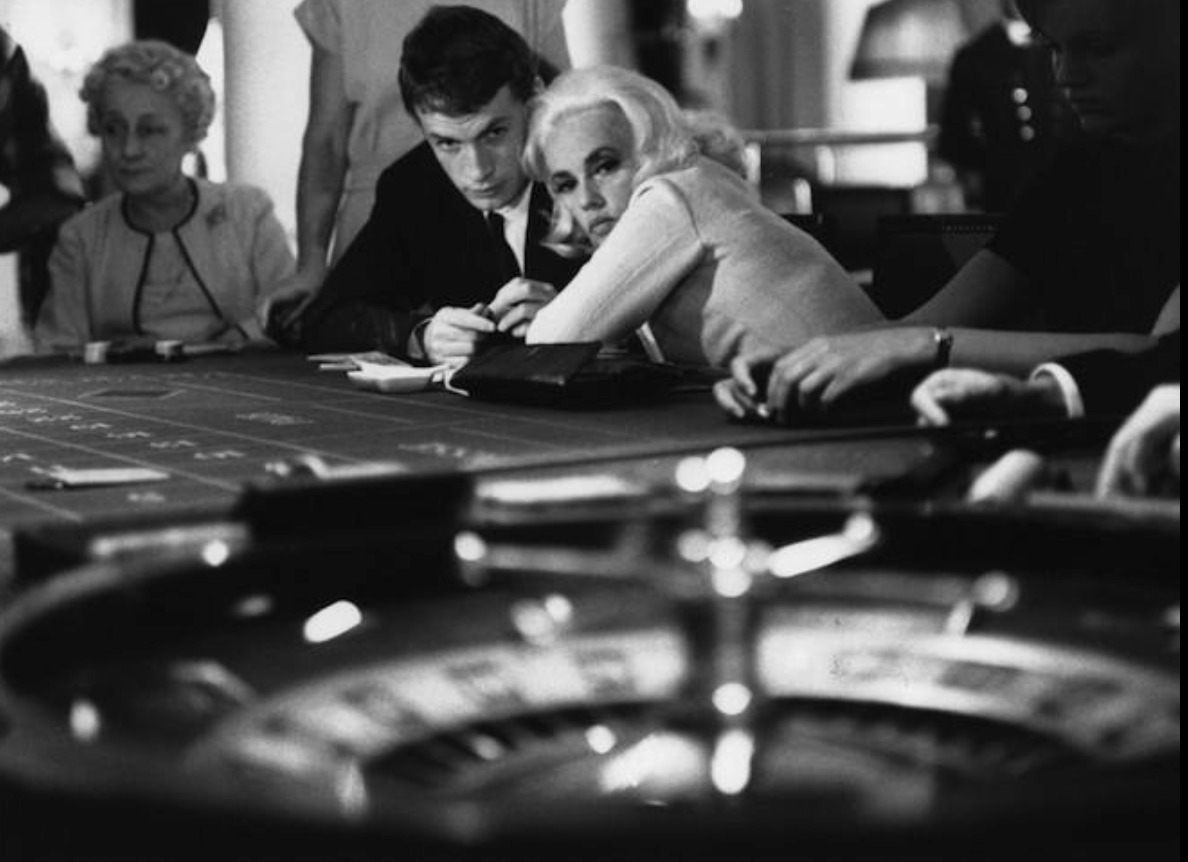
There is a more practical reason, too, that crime cinema in particular fell in love with the game of chance. Storytelling lives on suspense, and a game of chance comes with suspense built in. The wheel is spinning; the dice are in the air; the card has not yet turned. For a few unbearable seconds the outcome hangs in genuine uncertainty, and the audience leans forward without being told to. A filmmaker who wants to wind tension to its highest pitch need only cut to the spinning wheel and let the mechanism do its work. The roll of the dice mirrors the larger uncertainty of the plot, the question of whether the hero will survive, whether the scheme will succeed, and so the small gamble on screen becomes a perfect emblem of the larger gamble of the story itself. The heist film made an entire genre out of this principle, structuring its plots as one elaborate bet against impossible odds.
Roots in the Real Underworld
It would be a mistake to treat all this as pure symbolism, because the link between crime and gambling has deep roots in reality. For much of the twentieth century, the gambling industry and organised crime were genuinely intertwined, with criminal organisations building and running casinos, laundering money through them, and fighting over the immense profits they generated. The mythology of a desert city raised by gangsters out of nothing, financed by illicit money and shadowed by violence, is grounded in fact. Crime fiction did not invent the connection between the casino and the criminal world; it drew on a reality that was already dramatic, and in doing so gained an authenticity that pure invention could never supply.
This grounding matters because it gives the gambling aesthetic its weight. When a crime story sets its action in a casino, it taps into a real history of money, power, and violence, and the audience senses that the danger is not merely decorative. The green felt and the spinning wheel carry the memory of a genuine underworld behind them.
Put all of this together and the centrality of the game of chance to crime fiction stops looking like a coincidence and starts looking inevitable. In a single image, gambling delivers the genre's fatalistic philosophy, its ideal setting, its richest characters, its readymade suspense, and its roots in a real and dangerous history. The dice tumbling across the table are not just a prop. They are crime fiction's purest symbol of itself, a small drama of risk and ruin that contains the whole genre in miniature, which is why, whenever a story wants to summon the world of crime in an instant, it still reaches, almost by reflex, for the spin of the wheel.