The Forces Quietly Shaping the Next Era of Online Casinos

Predicting the future of any technology-driven industry is a hazardous business, and online gambling is no exception. Yet while specific predictions age badly, the underlying forces shaping an industry tend to be visible in advance, if you know where to look. The online casino of the coming years will not be transformed by a single dramatic invention but by the steady pressure of several trends already underway — in technology, regulation, payments, and player expectations. Reading those forces, rather than guessing at gadgets, is the honest way to think about where the industry is heading and what it will mean for the people who use it.
Beyond the hype of prediction
It is worth beginning with a note of caution, because the future of online gambling is a subject that attracts a great deal of breathless speculation. Every year brings confident claims that some new technology will revolutionise everything, and most of those claims fade. The useful approach is not to chase the shiniest prediction but to identify the durable forces — the trends with real momentum and clear incentives behind them — and to consider how they are likely to shape the experience over time. These forces are less exciting than a bold forecast but far more reliable as a guide.
What follows, then, is not a set of predictions about specific products but a reading of the pressures already reshaping the industry. Some will play out faster than others, and the details will surprise everyone. But the direction of travel is discernible, and it is grounded in things that are already happening rather than in speculation about what might. Understanding these forces gives a truer picture of the next era than any list of gadgets could.
Technology deepening immersion and personalisation
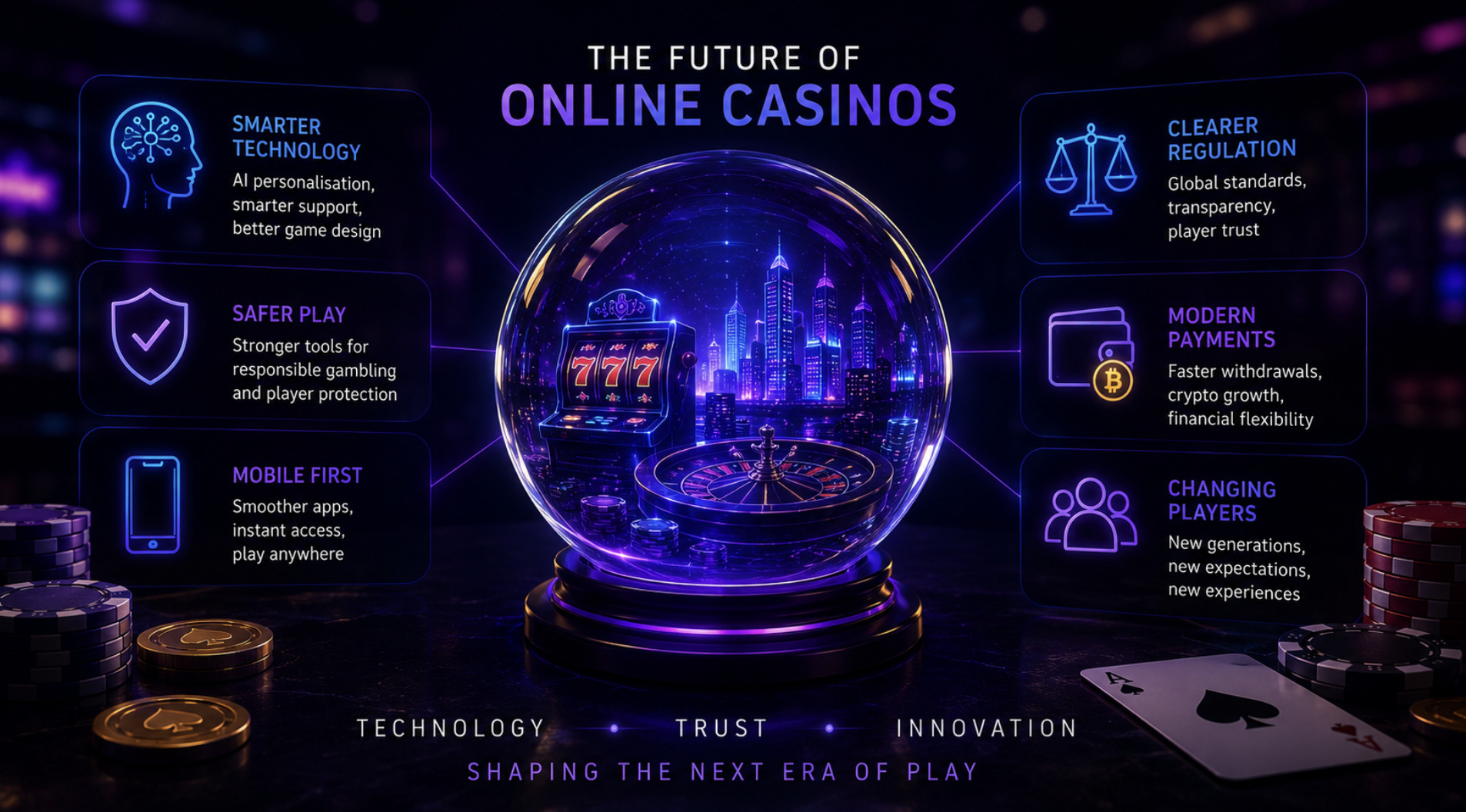
The most obvious force is technological, and it points in two directions at once: deeper immersion and greater personalisation. On immersion, the trajectory of live casino gaming — from simple streamed tables toward richer, more interactive, more social experiences — suggests a continued blurring of the line between the digital and the physical. Improvements in streaming, interactivity, and interface design will likely make online experiences feel progressively more present and engaging, closing the gap with the atmosphere of a physical venue. Emerging immersive technologies may extend this further over time, though their eventual role remains genuinely uncertain rather than assured.
On personalisation, the growing use of data and machine learning is steadily making the experience more tailored to the individual — in game discovery, interface, and the surrounding features. This is the same force reshaping consumer technology generally, and it carries the same double edge: personalisation can genuinely serve players by helping them find what they enjoy, or it can be tuned purely to maximise engagement. Which direction it takes will be one of the defining questions of the coming years, and it is as much an ethical choice as a technological one. The technology enables both; the values of the operators using it will decide which prevails.
Payments and the reshaping of money
A second force is the ongoing transformation of how money moves, which quietly shapes the experience as much as any game. The trend toward faster, more local, and more varied payment methods shows no sign of slowing. Instant payment systems, mobile wallets, and the gradual maturation of cryptocurrency options are collectively pushing toward a world where deposits and, crucially, withdrawals happen faster and more seamlessly than the multi-day waits that long characterised online gambling.
Withdrawal speed in particular has become a competitive and reputational battleground, and the pressure to pay players quickly is likely to intensify. As payment technology advances, the friction that once defined moving money in and out of a casino continues to erode, and players increasingly expect near-instant access to their funds. Cryptocurrency's role remains genuinely uncertain — subject to regulation, volatility, and adoption — but the broader direction toward speed, locality, and choice in payments is clear. This is a less glamorous force than immersive technology, but it may shape the everyday experience of online gambling more directly than any of the flashier trends.
Regulation as the shaping hand
Perhaps the most powerful force shaping the next era is not technological at all but regulatory. Across many markets, the trend is toward tighter oversight: stricter licensing, stronger requirements around player protection and responsible gambling, tighter advertising rules, and more rigorous standards for fairness and security. This regulatory tightening is reshaping the industry from the outside, raising the barrier to entry and pushing operators toward greater accountability, transparency, and consumer protection.
The effect over time is likely to be a more professionalised, more tightly governed industry, in which the practices that responsible operators already follow become baseline legal requirements. Regulation tends to be resented by operators and cheered by consumer advocates, but its net effect has generally been to raise standards and squeeze out the least scrupulous players. The coming years will almost certainly see this force strengthen rather than weaken, and it will do more to shape the character of online gambling — how safe, how transparent, how player-protective it is — than any single technology. The industry that emerges will be defined substantially by the rules it is made to follow.
Rising expectations of responsibility
Running alongside regulation is a shift in expectations, both from regulators and from players themselves, toward greater responsibility. There is growing recognition that the design of gambling products carries ethical weight, and mounting pressure — legal, social, and reputational — for operators to prioritise player wellbeing rather than engagement at any cost. Tools for setting limits, systems for identifying problematic patterns, and transparency about odds and terms are moving from optional extras toward expected features.
This force intersects directly with the technological one, because the same data and machine-learning capabilities that enable personalisation can also power sophisticated protection — identifying signs of harm early and intervening before it deepens. The operators that thrive in a more scrutinised environment are likely to be those that turn their capabilities toward genuine player protection rather than away from it. A platform such as Spookino that pairs its games with robust responsible-gambling tools reflects the direction the industry is being pushed: toward treating player wellbeing as central rather than peripheral. Whether the industry embraces this shift willingly or is dragged toward it by regulation, the expectation of responsibility is a force that will only grow.
The constant beneath the change
For all the forces of change, it is worth noting what will not change, because it anchors any honest view of the future. The fundamental nature of the games will remain the same: outcomes determined by chance, a mathematical house edge built into every game, and no technology that alters the underlying odds. However immersive, personalised, fast, and well-regulated online gambling becomes, it will still be gambling — entertainment with a cost, best approached within limits, never a reliable path to profit. The trends reshape the experience around the games; they do not change what the games are.
This constant matters because it keeps the future in perspective. The coming era will likely bring richer experiences, faster payments, tighter regulation, and stronger protection, and these are genuine improvements. But the wise player will carry the same fundamentals into that future that serve them now: an understanding of the odds, a firm budget, and a view of the games as entertainment rather than income. The technology will grow more sophisticated; the mathematics will not change. Holding both truths together — embracing the improvements while remembering the constant beneath them — is the clearest way to think about what comes next.
Conclusion
The next era of online casinos will be shaped not by a single revolution but by the steady pressure of forces already in motion: technology deepening both immersion and personalisation, payments growing faster and more seamless, regulation tightening across markets, and expectations of responsibility rising from regulators and players alike. Together these point toward an industry that is more engaging, more convenient, more tightly governed, and — where operators rise to it — more genuinely protective of the people who use it. Beneath all the change, the fundamental nature of the games remains constant, a reminder that the future will transform the experience of gambling without altering its essence. Reading these durable forces, rather than chasing the latest prediction, is the honest way to understand where online gambling is heading — and to meet that future with clear eyes.