Medium's Elegant Serif and Why It Works
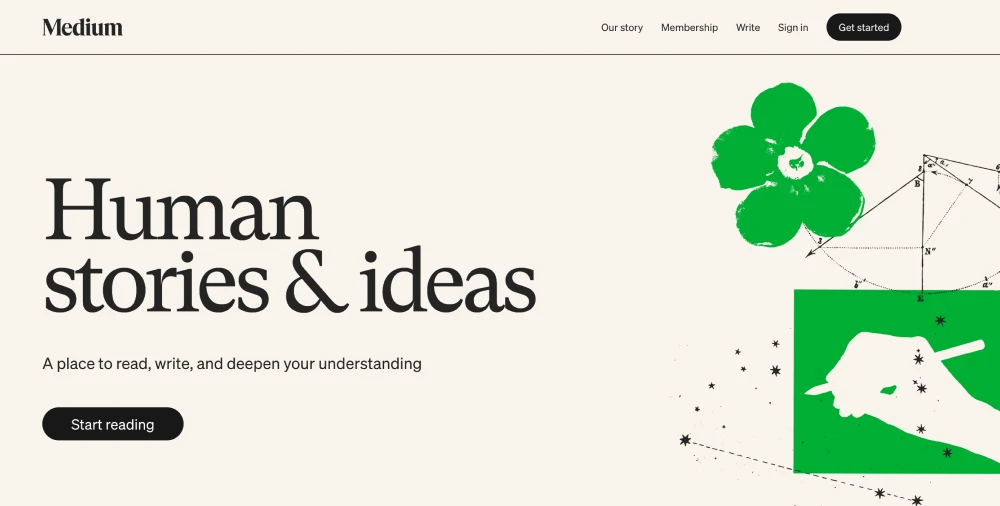
If you’ve ever landed on Medium’s homepage, you’ve probably felt it before you consciously noticed it—the typography just feels right. Clean, confident, and editorial without being intimidating. Looking closely at the screenshot, the large headline “Human stories & ideas” reveals the typeface behind that feeling: GT Super.
GT Super is not just another serif font. It’s a deliberate choice that says a lot about Medium as a platform, and more broadly, about how modern startups think about typography.
At its core, GT Super is a contemporary serif typeface designed by Swiss type foundry Grilli Type. It draws heavy inspiration from classic newspaper typography, especially the kind you’d see in old-school editorial layouts. But unlike traditional serifs that can feel rigid or overly formal, GT Super introduces warmth and personality through subtle quirks—slightly exaggerated curves, expressive contrast, and a softness that makes it approachable on screens.
This balance is exactly why it works so well for Medium.
Medium is not just a blogging platform; it positions itself as a space for thoughtful writing. The typography reinforces that identity. By using a serif like GT Super for its main headlines, Medium taps into a long-standing association between serif fonts and credibility. For centuries, serif typefaces have been used in books, newspapers, and academic publications. They signal seriousness, depth, and readability.
But Medium is also a tech startup, not a legacy newspaper. It needs to feel modern, accessible, and digital-first. This is where GT Super shines. It carries the DNA of traditional print typography but is clearly designed for contemporary use. On high-resolution screens, it looks crisp and expressive, never outdated.
There’s also something important happening in the emotional tone of the font. GT Super feels human. The slightly irregular shapes and organic flow of its letterforms give it a kind of personality that aligns perfectly with Medium’s messaging: “Human stories & ideas.” The font doesn’t feel mechanical or corporate—it feels like it belongs to writing that matters.
From a design perspective, GT Super also performs extremely well at large sizes, which is exactly how Medium uses it. Headlines are bold, spacious, and commanding without being aggressive. The contrast between thick and thin strokes adds visual interest, while the generous spacing keeps everything readable and elegant.
Looking at the history of GT Super helps explain why it fits this role so naturally. The typeface was originally developed as part of a larger exploration into editorial typography in the digital age. It was designed to bridge the gap between classic print aesthetics and modern screen requirements. That intention is visible in every letterform—it feels rooted in tradition, but built for today.
In many ways, Medium’s use of GT Super reflects a broader trend in design. After years of dominance by minimalist sans-serif fonts in tech, many platforms are rediscovering the value of serif typography. Not as a nostalgic throwback, but as a way to bring depth, personality, and trust back into digital experiences.
Medium gets this balance right. By choosing GT Super, it avoids the coldness that can come with overly neutral fonts, while still maintaining a clean and professional look. The result is a reading experience that feels both modern and timeless.
So the next time you visit Medium, take a moment to notice the typography. That sense of calm authority and readability isn’t accidental—it’s GT Super doing exactly what it was designed to do.